
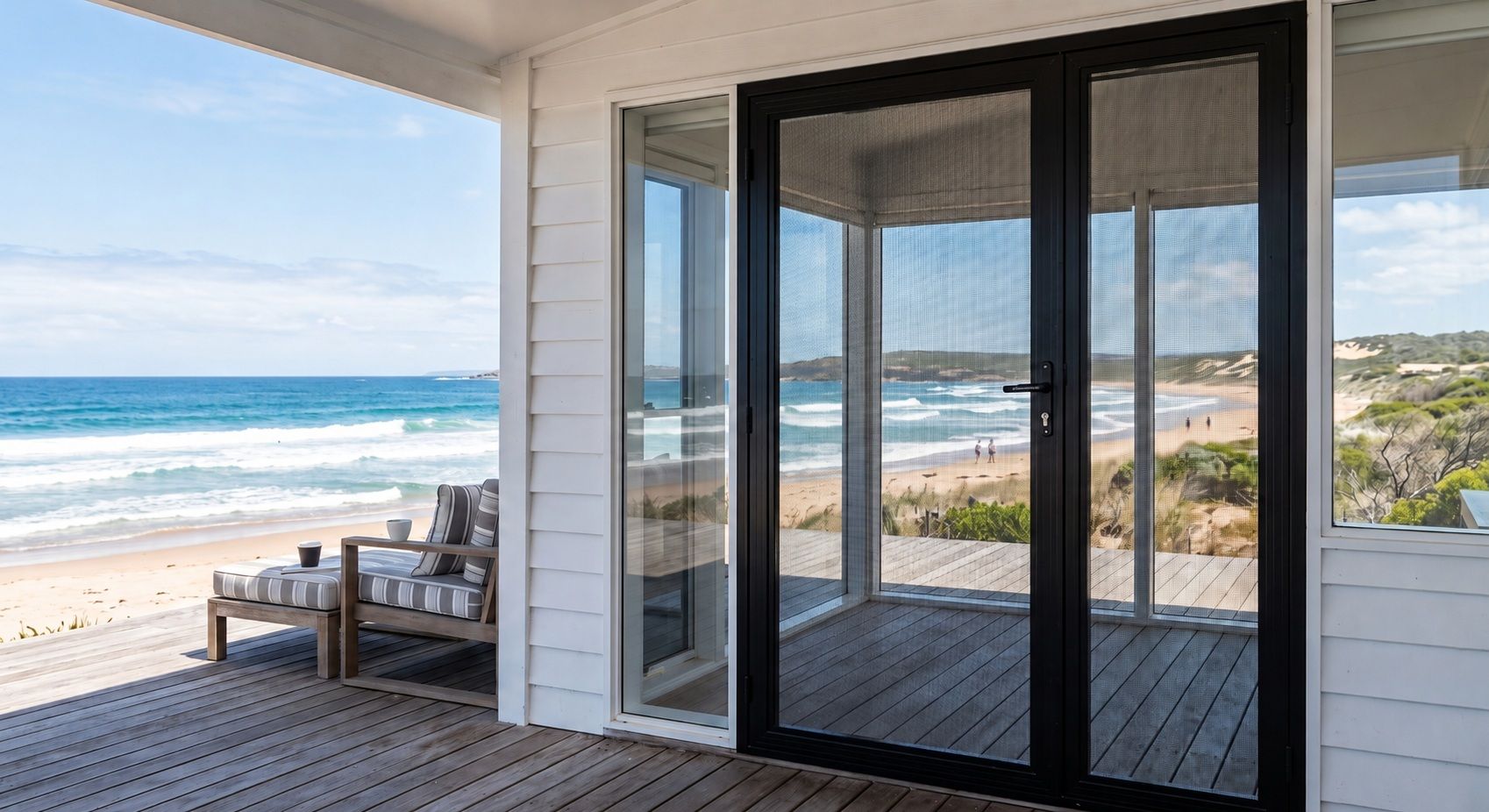
Living by the Australian coast offers stunning ocean views and refreshing sea breezes, but the harsh marine environment introduces salt spray and high humidity that quickly corrodes standard window coverings and security doors. To protect your seaside home without sacrificing your view or ventilation, you must install premium marine-grade stainless steel security screens. These specialized screens withstand heavy salt exposure, prevent break-ins, and keep coastal pests out of your living spaces.
Investing in high-quality, corrosion-resistant security screens ensures your property remains safe and structurally sound for decades. Standard aluminum or low-grade steel screens will pit, rust, and fail within a few years of coastal exposure. By choosing materials specifically engineered for maritime conditions, you minimize maintenance time and avoid premature replacement costs.
Why Coastal Homes Need Marine-Grade Protection
The Australian coastline subjects your home to airborne salt particles and intense moisture every day. This combination accelerates the oxidation process on metal surfaces, causing weak materials to degrade rapidly.
The Threat of Galvanic Corrosion
When two different metals touch in a wet, salty environment, they react and corrode each other. Standard security doors often use mismatched screws and mesh, which causes the frame to weaken and fail. Marine-grade security screens utilize specialized insulating tape to isolate different metals and prevent galvanic corrosion entirely.
Impact Resistance in Severe Weather
Coastal storms bring fierce winds and flying debris that can easily smash standard flyscreens or glass windows. Premium security screens act as a shield for your glass panes, absorbing heavy impacts from debris during wild weather. Selecting screens tested against cyclone-rated debris impacts keeps your glass intact during severe coastal storms.
Key Materials That Withstand Salt Spray
Not all metal screens handle the ocean air the same way. You need to look for specific material grades to guarantee your investment lasts.
316 Marine-Grade Stainless Steel
This is the gold standard for coastal properties. Mesh made from 316 marine-grade stainless steel contains molybdenum, an element that specifically resists pitting caused by chloride and salt. * It offers the highest level of tensile strength against forced entry.
- It maintains clarity so you do not lose your ocean view.
- It requires minimal cleaning compared to lower-grade metals.
High-Grade Powder Coated Aluminum
The outer frames of your security screens must match the durability of the mesh. Ensure your frames feature a commercial-grade powder coating that complies with Australian atmospheric standards. This thick protective layer blocks salt from reaching the underlying metal frame.
Maintaining Your Coastal Security Screens
Even the best marine-grade materials require basic care when subjected to daily salt grime. Regular maintenance keeps your screens looking new and operating smoothly.
- Wash your screens every two to three weeks with warm water and a mild car wash detergent.
- Avoid harsh chemical cleaners or abrasive brushes that can scratch the protective powder coating.
- Rinse the tracking and hinges thoroughly to prevent salt crystals from building up in the moving parts.
Key Takeaways
- Salt air rapidly destroys standard metal window screens, making marine-grade materials essential for coastal properties.
- Always insist on 316 marine-grade stainless steel mesh to prevent rust and pitting from salt spray.
- Ensure frames feature high-quality powder coating to protect the structure from atmospheric corrosion.
- Regularly wash screens with fresh water and mild soap to remove salt build-up and extend their lifespan.
Contact Details
- Phone: 0411 782 236
- Email: [email protected]
- Website: https://shuttersandshades.com.au