
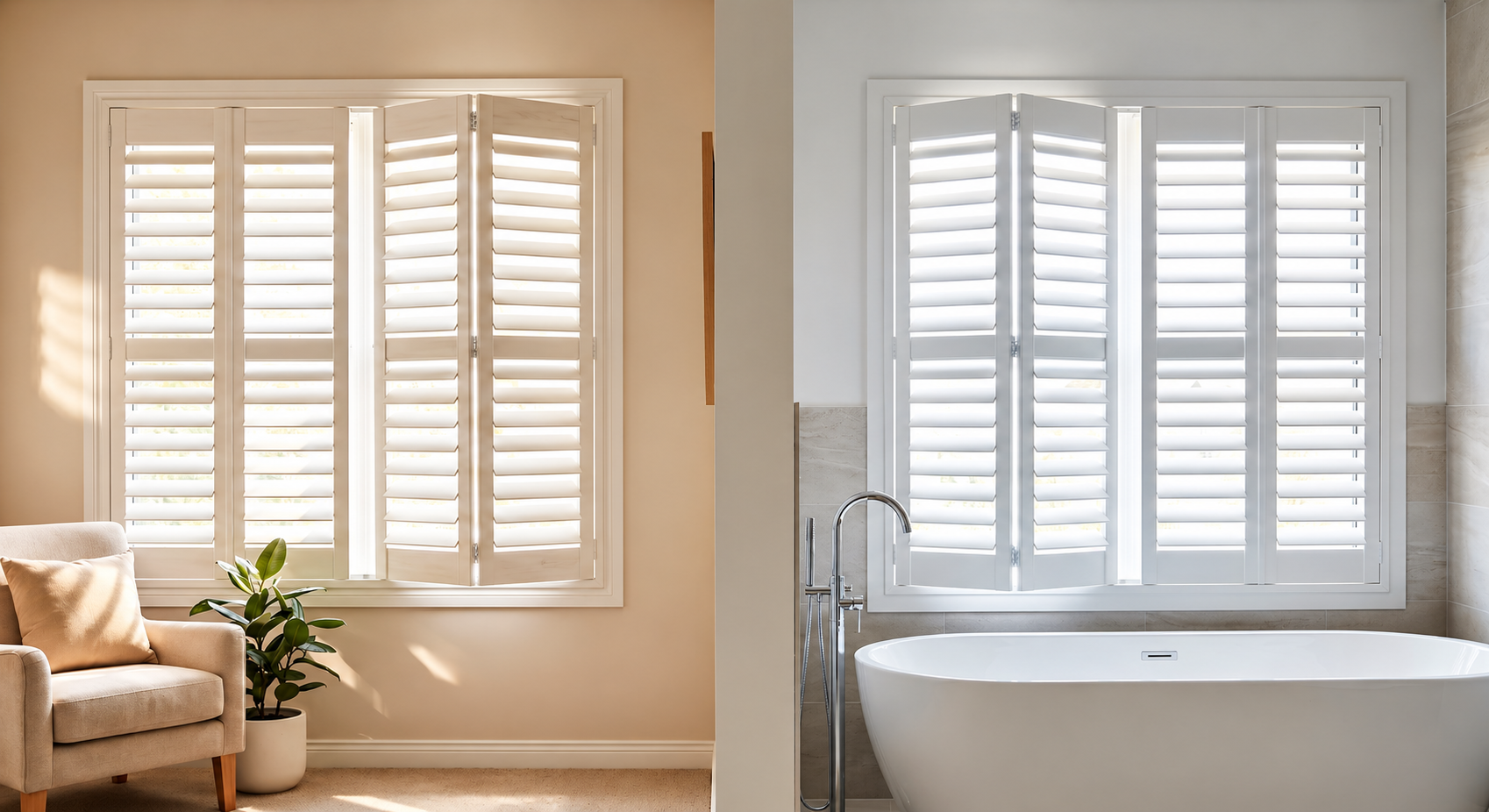
Choosing the right material for your internal shutters depends primarily on the specific environment of your room and your personal style preferences. Timber shutters offer a premium, natural look for living areas and bedrooms, while PVC shutters provide a water-resistant solution for bathrooms, kitchens, and laundries.
Selecting the wrong material can lead to warping or peeling over time, especially in the harsh Australian climate. We recommend timber for its lightweight strength in large windows and PVC for its durability in high-moisture zones.
The Benefits of Timber Shutters
Timber shutters are the traditional choice for Australian homes. We use high-quality hardwoods that provide a warm, organic feel to your interior design.
- Timber is lighter than PVC, making it better for very wide window spans.
- Natural wood offers superior insulation properties to help regulate indoor temperatures.
- You can choose from various stains to showcase the natural grain of the wood.
- Timber shutters are easier to repair if they suffer minor scratches or dents.
Are you looking to add a sense of luxury to your master bedroom? Timber remains the most effective way to achieve a high-end finish that complements wooden flooring or furniture.
Why You Should Choose PVC Shutters
PVC shutters are engineered to withstand the humidity and moisture found in wet areas. They will not swell, crack, or peel when exposed to steam or direct water splashes.
- PVC is the best material for bathrooms, ensuites, and kitchen sinks.
- The aluminum core inside our PVC louvres provides extra strength to prevent sagging.
- These shutters are very easy to clean with a damp cloth and mild detergent.
- PVC is often a more cost-effective option for homeowners on a budget.
Do you have a window inside your shower or right above your kitchen prep area? PVC allows you to maintain a consistent look throughout your home without worrying about water damage.
Comparing Aesthetics and Longevity
Both materials look almost identical once they are painted in a classic white or cream finish. Most guests in your home will not be able to tell the difference just by looking at them.
Weight and Structural Support
Timber is naturally rigid and can cover larger areas without needing extra support. PVC is heavier, which is why we include internal metal reinforcement in the blades.
Maintenance Requirements
PVC requires very little upkeep and handles daily wear and tear well. Timber may need a fresh coat of paint or stain after many years to keep it looking its best.
Thermal Performance
Timber is a natural insulator that helps keep your home cool during a hot Australian summer. PVC also offers good thermal resistance but does not quite match the natural properties of wood.
Making Your Final Decision
Consider the “wet test” for every room in your house before you place an order. If the room generates steam or has high humidity, choose PVC to ensure your shutters last for decades.
For loungerooms, dining areas, and bedrooms, timber provides a more refined aesthetic. The best approach is often a “split shipment” where we install timber in living spaces and PVC in wet areas.
Key Takeaways
- Use PVC for bathrooms, laundries, and kitchens to prevent moisture damage.
- Select timber for large windows and living areas to enjoy its lightweight strength.
- Both materials provide excellent light control and privacy for your home.
- PVC is typically more affordable, while timber offers a premium natural finish.
Phone: 0411 782 236 Email: [email protected] Website: https://shuttersandshades.com.au